

Your Harley Street Deep Plane Facelift
 Look 10 Years Younger with Dr. De Silva’s Signature Deep Plane Technique
1000+ Outstanding 5-Star Reviews
Natural-looking Results
What Is A Deep Plane Facelift?
The deep plane facelift is the most technically advanced form of facelift, and fewer than 5% of plastic surgeons are qualified to perform it. Dr De Silva is proud to be among them. Drawing on extensive facial anatomy and surgery expertise, he has developed a signature deep plane facelift that combines the principles of the deep plane technique, the Golden Ratio, and specialised methods to minimise discomfort. This is known as the Vertical Face Restore 7 technique, or VFR-7.
This approach lifts both the cheeks and the facial muscles, removing the need for additional fillers. The result is a sharper, youthful look that preserves natural facial contours. Dr De Silva’s signature VFR-7 deep plane facelift is ideal for patients aged 40 to 60, effectively addressing fine lines, volume loss, sagging skin, and jowls.
EXCELLENT
Based on 155 Reviews

Clare Halliday

I would like to share my experience of my face and neck lift with Dr De Silva. First and foremost I will tell you truthfully, that with all I now know for my experience, I would go through it all again tomorrow if I had too. It was so different from what you hear, and all the botched jobs you see. I picked Dr De Silva after much research, and the fact that he only specialises on the face, I made my appointment. From my first consultation till my 1yr check up, I can only but give him and his team 100% Dr De Silva has an extremely calming way with him. He puts you at your ease and explains EVERYTHING in minuet detail. He leaves nothing out, everything he said happened in that way. From having pre op’s till the day of surgery nurses Ellie and Josie were fantastic, so helpful and friendly. I was told by Dr De Silva that It would not be painful, just a bit uncomfortable, that was true. I had no pain at all at anytime from start till now, Swollen and bruised yes, the bruising had all gone in 2 weeks. Swelling took a little longer. I was also told it would be quite numb for some time. It was, but it didn’t bother me, and now I have very little numbness left. It can take up to 9 months I think. I didn’t want to look different, I didn’t want to change anything, all I wanted was to look rested and fresher, a better version of myself. I am soooo happy with my lovely tight neck and no more loose skin and hanging jowls. It has made the biggest difference to my confidence. No one has asked have I had work done, they just say “ you are looking great”. If you are thinking of a face lift or any facial work done, I can 100% guarantee you will not find a better surgeon… anywhere. My extreme gratitude to Dr De Silva, Dr Andre (anaesthetist). Nurse’s Ellie & Josie and to Sarah who sorted all the paperwork etc.
Angela Haines
Best of the Best! Incredible experience all round and natural looking results. I had originally seen Dr Julian De Silva for a consultation back in 2017 and had followed his work for years, so I was familiar with his style of surgery and artistry. I had studied his work of the ‘Golden Ratio’ and even bought his book years ago. At my first consultation, Dr Julian and his team immediately made me feel at ease. His wonderful team - Sarah, Mags, Mackez, Adam and the lovely nurses Alice, Josie and Kelly were all very kind and welcoming. I instantly felt at home. It’s a lovely energy when you go into 23 Harley Street and everything, including the operating theatre is there. Dr Julian De Silva’s kind and calm nature made him stand out from the rest of top surgeons that I had seen over the years. I didn't feel rushed, and he listened and understood my concerns. He explained to me about hyper mobility, where the skin can stretch at a younger age and this made sense why I was seeing premature signs of ageing such as ptosis and jowls forming. I felt relieved that finally a surgeon understood how I was feeling and didn't immediately turn me away dismissing me because of my age, saying I was too young etc. I knew he was the surgeon for me. A strong gut feeling and I trusted him 100%. I knew of his natural looking results from his previous work with other patients. He is truly an artist and has very fine attention to detail in his work. - Just look at his analysis of Renee Zellweger video on YouTube and you’ll understand what I mean. It is just over 3 months now since I had the operation and I am delighted with the results! My jowls have completely gone and I have my v shape jawline back. Dr Julian told me that the skin had dropped 2.5 centimeters and that is how much he had to lift it up again, which is a lot for someone my age and testament to the hypermobility. I can now wear eyeshadow without it creasing and my eyebrows are back to where they were pre ptosis! My confidence has come back and I am feeling so much more positive about how I look. My experience with Dr Julian De Silva and his team was second to none - No other surgeon could have done a better job. What I like about Dr Julian De Silva is his humbleness and integrity. He is not only a surgeon but an artist - He will look at the symmetry of your face and treat it like a work of art ; this goes beyond just surgery, this is artistry. From my results, especially around my eyes I can see how intricate and finely done with attention to detail he has perfected everything which makes for such natural results. The whole experience from the first consultation right through to the 3 month mark with several visits in between has been so enjoyable for me. I loved the whole experience of my trips up to 23 Harley Street. He has a great team who make you feel at home and comfortable straight away, they are very accommodating and always on hand with any questions or concerns you may have. It’s a lovely energy there. I have had consultations with other top surgeons in London and met their teams over the years but none have been on this level. Julian and his team are a rare find. I’m so pleased and grateful I picked Dr Julian De Silva and his team - I want to go back and get more things done for the joy of the whole experience, which says a lot!
Angela Irwin
Thank you to everyone for their professionalism and care. PS love the results week 1 to week 6. Completely pain free throughout, thanks again xxx
alexis val
I recently had a chin implant by Julian. It’s something I had considered for years but had felt apprehensive about, not knowing where to go and whom to trust. It’s a serious surgery and it was a bit stressful at the start, knowing where to look to find someone I could trust. I started by googling about chin implants and came across a few people in London who do them. I did as much research as possible by looking at before and afters, reading Google reviews, reviews on other sites like Realself, and looking into doctors abroad, etc… The great thing about Julian is that he has a lot of YouTube videos and content on Instagram that show him and his personality, along with people's experiences. Specifically, there are a few video diaries on his YouTube channel of people who have had this surgery, with a day-by-day step of their recovery. This really helped me and gave me peace of mind. I decided to have a consultation with Julian. The consultation wasn’t free but was definitely worth it. I felt listened to and didn’t feel rushed. I had an hour-long chat where I basically asked him to tell me which elements of my face could be treated to improve my appearance. Julian gave me concise information and it made complete sense. I was quoted for a couple of surgeries that I could have which would make a bit of difference to help balance things but from our discussion it was obvious that the chin implant would make the most difference. I took a few months to think about it but I decided to go for the chin implant. The operation was performed under twilight anesthesia. I hadn’t had this before and was a bit apprehensive but honestly it was absolutely fine and actually quite relaxing. All I remember is going into the theater, surrounded by lovely friendly nurses, feeling a bit sleepy, and next thing I know I’ve woken up in the theater. It felt like time had passed, I wasn’t groggy and within 30 minutes I was on my feet and could leave. For the next week after the surgery I was on quite a few different pills and I did feel quite out of it. Definitely do not have anything planned for the week following surgery, you will want to be at home with a few Netflix series ready to watch as you will need to rest up and let your body heal. It was a bit strange to smile for a few weeks after the surgery and my chin area felt a bit tight at first but you start to forget it’s there after a while. The result is very natural and I feel that I look a lot better, nobody has asked me if I have had something done but people have mentioned that I’m looking good but they aren't quite sure why haha. This is exactly the result I was looking for. The surgery isn’t cheap, it was upwards of £10,000 but was it worth it? For me, 100% yes. I just wish I had got it sooner tbh. There are other surgeons who are cheaper, you could go abroad to Turkey to get surgery or find someone based outside of London but in my opinion if you want this kind of surgery there is no point in trying to find a cheap option with a risk that it’s not going to be exactly how you want it. With Julian you have peace of mind that you’re with one of the leading plastic surgeons in the country, he also uses a technique that uses two titanium screws which attach the implant to the skull so that it doesn’t move. A lot of other surgeons do not use this technique and from reading reviews a lot of these people have had to get revision surgery to get an implant as it has moved over time because it wasn’t attached like the way Julian does them. Honestly, If you want a chin implant and want the best in the business, this is the doctor you want.
Ashka C
I had a wonderful experience with Dr de Silva and his incredible staff. He is such a gifted and caring surgeon and I cannot recommend the London Centre highly enough.
Michael Chan
I am a timid young man plagued by hereditary eye bags. Used all my options from the latest creams advertised to the newest hacks trending to no avail. I concluded that facial surgery is my only way forward as it was starting to affect my mental health. Discovering his accessible YouTube channel was invaluable to my research. Alongside his detailed website, this gave me the confidence to reach out to the clinic. I met Julian and his team back in February for my consultation and proceeded with my surgery in March. (2024) From the consultation with Julian I was immediately relieved from all my questions and worries about the procedure I was enquiring (lower blepharoplasty). Informed by his wealthy knowledge and articulate descriptions. His respectful manner helped alleviate any stress induced from my own research. I had my complete trust in him and he proved it to me with his vast portfolio of successful clients who've had the same procedure. In that instance I knew I had come to the right place and could set my mind at ease. The team are supportive with great communication. Professional and friendly. Nothing but respect and gratitude for them all. From my experience with Julian's practice I felt welcome, positive and hopeful. Also the twilight sedation that he recommends is excellent! You go into surgery and it’s like falling asleep, and once it’s over the nurse wakes you up and you’re alert and aware. Thank you so much! I can finally smile with my eyes again. Highly recommend Julian to anyone that is considering facial surgery.
ZaInab Hassan
Dr Julian De Silva is the best surgeon ever . He is down to earth, kind, honest and you will definitely get the best results. He is an expert in his field of medicine and the Surgery has a team of fantastic staff.
Alice Tibaldi Chiesa
Dr Da Silva and his all team are very professional, always available for follow up and very clear communication. Thank you
Ruth Johnson
Almost one year in ... I am still delighted. Surgery is not for the faint hearted. You need to be brave, and prepared for some bumpy times in recovery. But it's worth it. Julian de Silva is on another plane. Not only an exceptional (world class) technician, he is also an artist who doesn't paint by numbers. So easy for me to recommend ...
What Are The Different Layers Of The Face?
Understanding the layers of the face is essential for appreciating how different types of facelift surgery are designed to target specific structures for aesthetic enhancement. Here’s a breakdown of each major layer:
Skin and Superficial Fat Layer
The skin itself and a superficial layer of subcutaneous fat directly beneath it provide the face’s visible surface and are crucial for texture, hydration, and youthful fullness. Over time, skin can lose elasticity, and superficial fat can shift or diminish, contributing to sagging and wrinkles.
Deep Facial Plane
The deepest plane, located beneath the SMAS, this layer includes deeper facial ligaments and muscles. It provides foundational support for the face and acts as an anchor for the overlying layers. This plane is crucial in advanced facelift techniques, where adjustments can offer more dramatic lifting and structural changes without overly tightening the skin or superficial tissues.
SMAS Layer (Superficial Musculoaponeurotic System)
Located beneath the superficial fat layer, the SMAS is a unique fibromuscular layer that covers and supports the face. This layer combines fibrous and muscular tissue, and its integrity is critical for maintaining facial structure. The SMAS layer is a primary focus in facelift surgeries, as repositioning or tightening it can significantly lift the face and restore youthful contours. Procedures that work on the SMAS are more invasive but yield substantial, long-lasting results.
Interested in a Deep Plane in London? Discover Our Patient Results
Dr De Silva avoids a “one-size-fits-all” approach, focusing instead on subtle enhancements that bring out your best features while addressing areas of concern. Discover our real-life patient transformations.
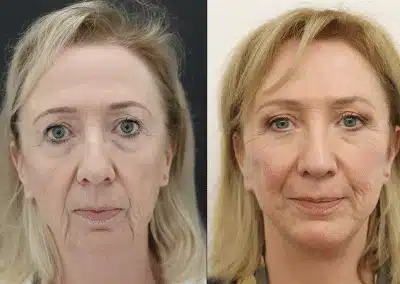
Look like you feel. A youthful, natural appearance was restored with Dr. Julian De Silva’s signature Vertical Deep Plane Facelift Restore. For complete rejuvenation, this patient also underwent fat transfer for added volume, a chin implant, and blepharoplasty to refine the eyelids.
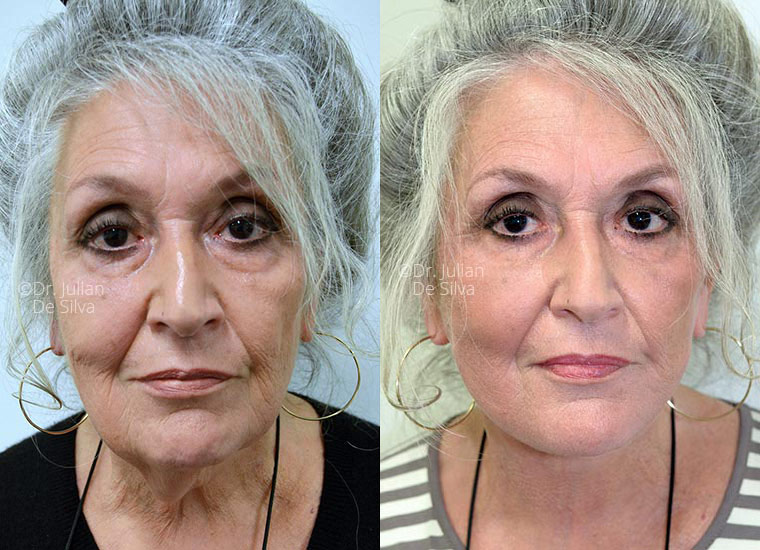
When you look in the mirror and don’t feel the age you see, it can affect your confidence and professional presence. This patient’s daughter said she looked 20 years younger the day after surgery. Here she is 6 weeks after her facelift and neck lift with Dr. Julian De Silva.
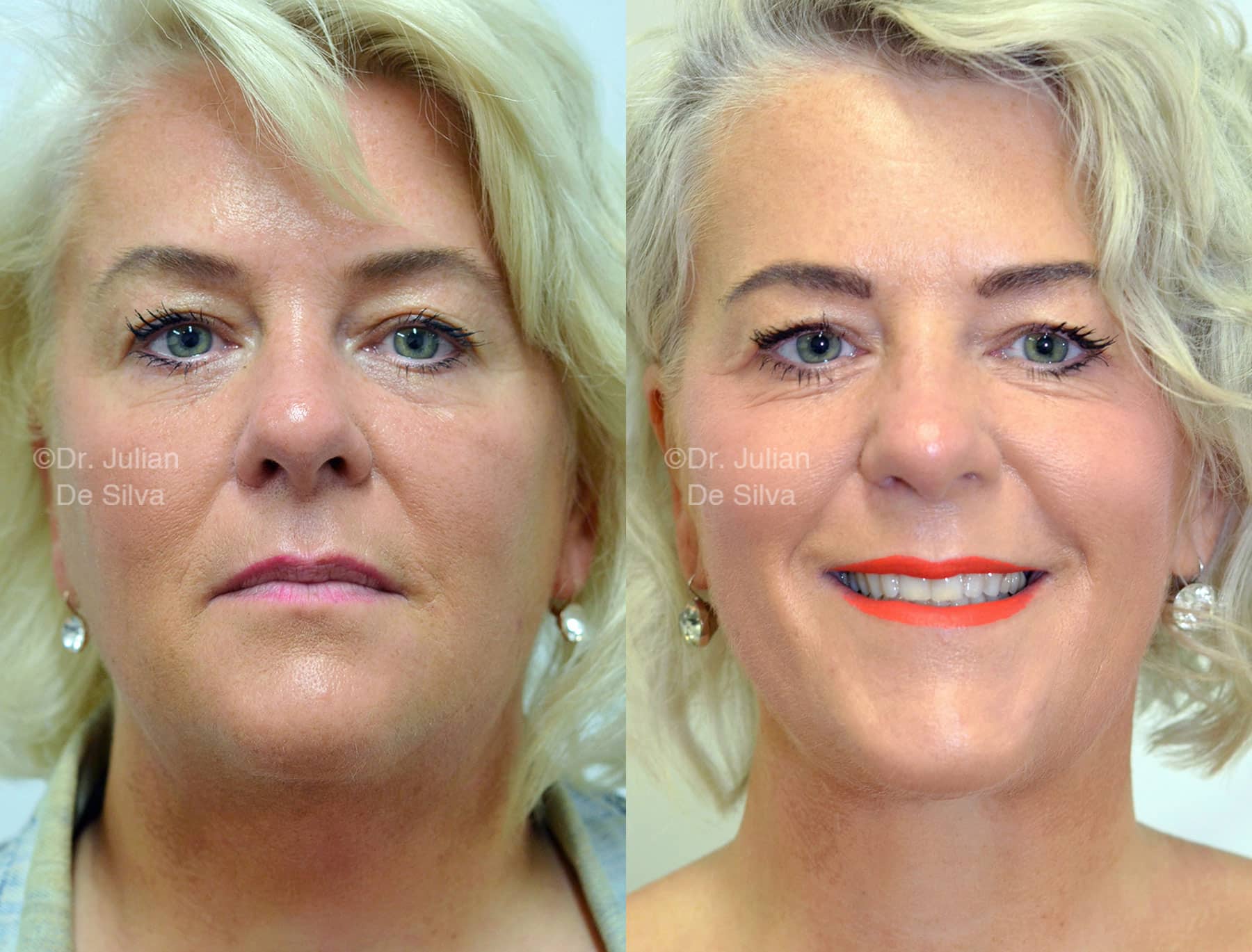
This wonderful patient had disliked her neck since her 20s and remains delighted years after surgery. Along with a deep plane facelift, she underwent a deep neck lift with deep fat and submandibular gland reduction, achieving a snatched jawline and neck definition even better than in her youth.
Look like you feel. A youthful, natural appearance was restored with Dr. Julian De Silva’s signature Vertical Deep Plane Facelift Restore. For complete rejuvenation, this patient also underwent fat transfer for added volume, a chin implant, and blepharoplasty to refine the eyelids.
When you look in the mirror and don’t feel the age you see, it can affect your confidence and professional presence. This patient’s daughter said she looked 20 years younger the day after surgery. Here she is 6 weeks after her facelift and neck lift with Dr. Julian De Silva.
This wonderful patient had disliked her neck since her 20s and remains delighted years after surgery. Along with a deep plane facelift, she underwent a deep neck lift with deep fat and submandibular gland reduction, achieving a snatched jawline and neck definition even better than in her youth.
Request a Consultation
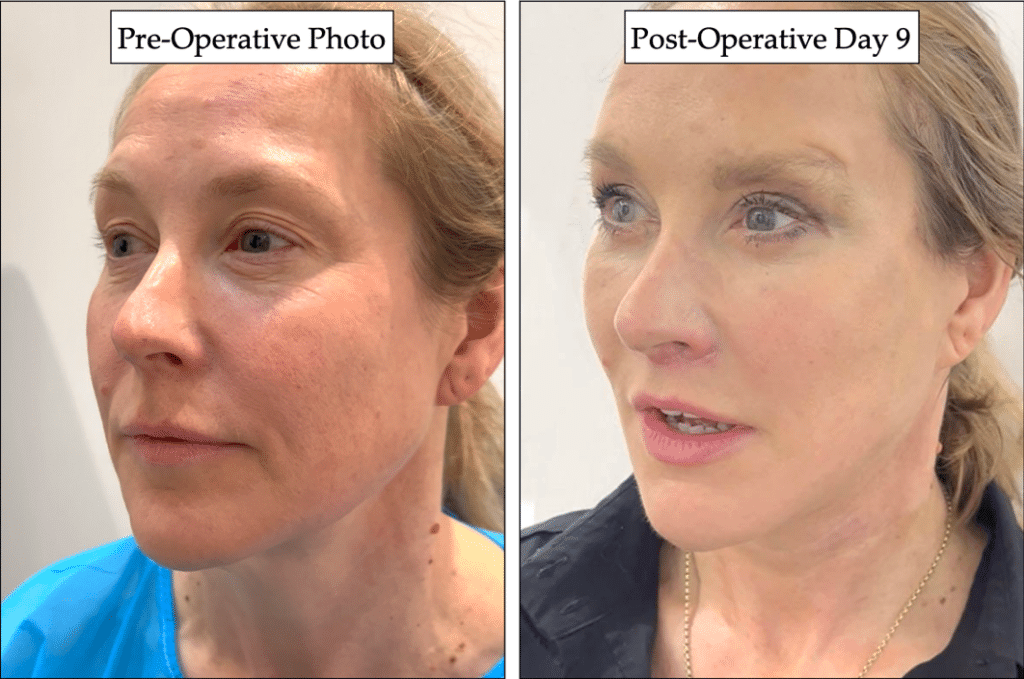
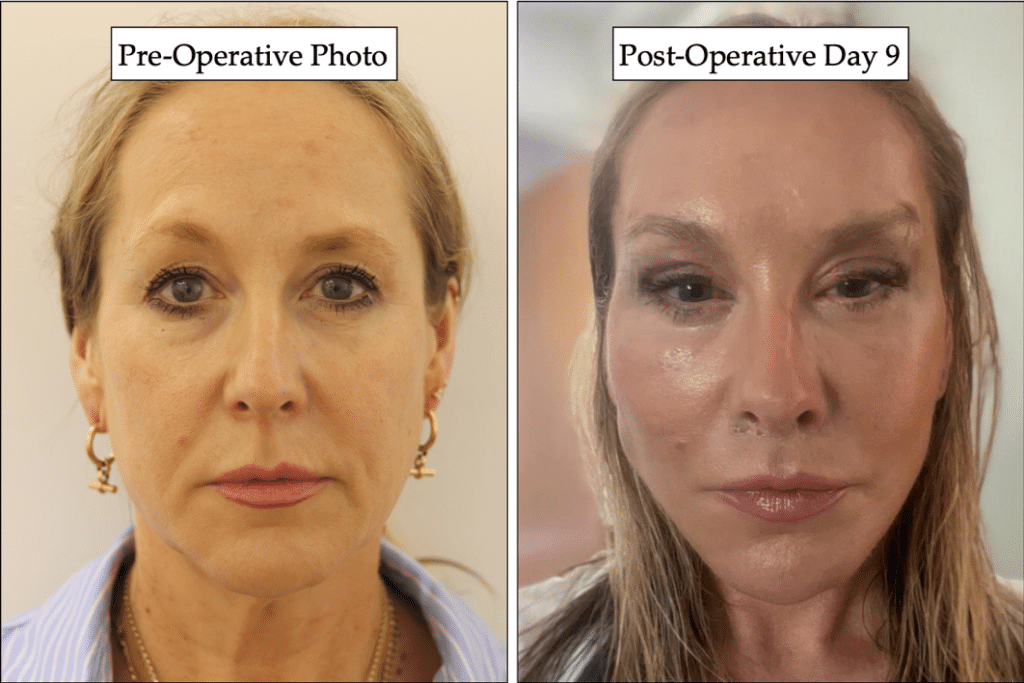
Deep Plane Facelift Results After 9 Days
Below are photos of Dr Julian De Silva’s patient, 9 days after Vertical Face Restore-7 treatment. The first patient (left) had been planning to travel to the US for similar treatment.

What Does The VFR-7 Deep Plane Facelift Address
If you’re experiencing mild signs of ageing, a mini facelift or a technique focused on tightening skin may be sufficient. However, for more pronounced facial ageing—typically from the age of 40 to 60—a deep plane facelift may be ideal. This advanced approach addresses significant issues like sagging skin, loss of volume due to gravity, and jowls, provided you are in good health.
Restoring a V-Shaped Jawline (Reducing Jowls)
A deep plane facelift is highly effective for restoring the natural, youthful V-shaped jawline by lifting sagging tissue vertically rather than pulling it sideways, as in traditional SMAS facelifts. By releasing key facial ligaments, this technique repositions tissues upwards without removing natural volume, achieving a smooth, natural look without any “pulled” appearance. This approach, combined with tightening the platysma muscle in the neck, enhances the neck’s contour and complements the lift in the jawline for cohesive, balanced results. For most patients, simultaneous neck and face adjustments provide the most harmonious outcome.
Reducing Square Shaped Fullness in the Jawline & Neck
Ageing often leads to a shift from a youthful V-shaped jawline to a square contour due to the sagging of the SMAS layer. This downward pull alters facial proportions, creating fullness in the lower face and neck. Unlike fillers, which smooth jowls but don’t restore the V-shape, a deep plane facelift addresses the root of the issue by lifting the facial tissues vertically. This restores youthful contours and reduces heaviness in the lower face, achieving a rejuvenated, natural V-shaped jawline.
Addressing Deep Wrinkles
A deep plane facelift effectively smooths deep wrinkles by targeting the deeper layers of the face, beneath the SMAS layer. Unlike traditional facelifts that focus on tightening the skin, this technique lifts the underlying facial structure, reducing tension on the skin and producing a natural, long-lasting result. By repositioning the facial support structures, the deep plane facelift softens pronounced lines around the mouth and nose, creating a refreshed, youthful appearance.
Restoring Volume to Sunken Cheeks
The deep plane facelift is also ideal for restoring volume to flat or sunken cheeks. By elevating the deeper facial tissues it repositions natural fat pads, enhancing the contours of the cheekbones. This approach revives fullness in the midface, eliminating the hollow look associated with ageing. The result is a balanced, youthful appearance, as the cheeks regain natural volume without the need for fillers or implants.
Why Choose Dr. De Silva for a Deep Plane Facelift in London?
A renowned expert in facial aesthetics, Dr. De Silva combines advanced surgical skills with an eye for natural beauty. His signature procedures, including the Vertical Deep Plane Facelift and Vertical Blepharoplasty, are designed to achieve subtle, long-lasting rejuvenation. Dr. De Silva’s commitment to patient safety and comfort has led him to adopt Twilight Sedation, a technique that reduces recovery time and enhances patient experience. He is also a passionate researcher of the golden ratio in facial aesthetics and a frequent instructor, sharing his expertise in facelift surgery with surgeons globally. With over 30% of his surgeries dedicated to revisions, Dr. De Silva is widely trusted for both primary and corrective facial procedures.
The Key Steps of the VFR-7 Deep Plane Facelift in London
A deep plane facelift effectively reduces signs of ageing such as sagging skin, jowls, nasolabial folds (lines from the edge of the nose to the mouth), and excess neck fat. After a deep plane facelift, you can expect smoother, younger-looking skin. In addition, getting a facelift early helps you recover faster. This is because there’s less tissue repositioning done. Yet, while a VFR-7 may provide superior results when compared with other types of facelift surgery, it does have some points to consider.
Not a Traditional Facelift
Unlike traditional facelifts, which often pull the skin sideways, the VFR-7 lifts the face vertically, creating a more natural, youthful appearance without the “pulled” look.
No Tissue Removal Required
While older techniques often involve removing tissue from the face, eyes, or neck, the VFR-7 prioritises lifting and preserving natural volume. This approach reduces the long-term need for fillers, as it maintains the face’s inherent softness and structure.
Not a Quick Fix
The VFR-7 requires a surgical approach that releases facial ligaments to lift areas back to their youthful position. This technique is designed for longer-lasting results, but it does involve a recovery period. Most patients experience initial swelling that settles within 2 to 6 weeks.
Not a Substitute for Natural Appearance
The “puffy” look often associated with repeated non-surgical treatments is avoided here. Many patients have found non-surgical methods insufficient, and the VFR-7 provides a more definitive, natural-looking lift.
Not a Guarantee of Perfect Symmetry
It’s natural for everyone to have slight facial asymmetries, even models and actors. While the VFR-7 aims for refined, balanced results, no surgical technique can achieve absolute symmetry.
Not a Solution for Life Changes
If you’re going through a challenging life phase, such as a breakup or career change, it’s best to wait until you feel ready before considering a cosmetic procedure. Surgery should be a decision made for personal fulfilment, not as a remedy for life’s difficulties.
Focused on Enhancement, Not Perfection
Every surgical procedure, including the VFR-7, is about refinement and achieving natural improvements. While results are carefully tailored, around 5% of patients may require a minor refinement procedure for optimal outcomes.
Read Our Deep Plane Facelift Harley Street Patient Testimonials
By addressing the entire face as one, Dr. Julian De Silva creates natural results that restore a youthful appearance. Read our patient testimonials.
“Dr. De Silva gives you the benefit of years of experience, qualifications not only in the U.K. but also the U.S. and yet you don’t lose the gentle bedside manner from this doctor. From our first meeting, Dr. De Silva won me over because he gave me the time to obtain answers and explanations to all my questions in kind details, as many times as I needed.”
Sandra
In the Press





Dr De Silva’s Signature Deep Plane Facelift in London
Dr De Silva’s VFR-7 deep plane facelift offers a comprehensive approach to facial rejuvenation, restoring youthful contours over a carefully managed timeline. From the initial consultation, where your goals and unique facial structure are assessed, to the surgery itself—focused on deep tissue repositioning for a natural lift—each stage is designed for seamless recovery and optimal results.
1. Initial consultation
The surgical process begins with a one-to-one consultation with Dr De Silva. During this honest and open discussion, you will be asked about your medical history, aesthetic goals and current facial concerns. Photos may be taken and Dr De Silva will create a personalised treatment plan adapted to your needs.
2. Pre-surgery preparation
To prepare for a deep plane facelift with Dr. De Silva, follow all preoperative instructions carefully, including avoiding certain medications, supplements, and alcohol, and stopping smoking at least two weeks before surgery. Arrange for someone to drive you home and, if possible, stay with you for the first 24 hours. Lastly, gather all necessary recovery items in advance, such as cold compresses, bandages, sleep-elevating pillows, and any prescribed pain relief.
3. Day of Surgery
On the day of surgery, arrive without makeup or skincare products and wear comfortable clothing. This procedure aims to reduce signs of ageing, leading to a more youthful and refreshed look. During this procedure, excess skin is removed from the face and neck areas, fat repositioned, and the skin tightened to create a smoother, firmer and youthful contour of the face. Sometimes, the procedure may also involve other techniques, such as brow lift or blepharoplasty. The technique used during vertical face restoration will vary between patients based on their needs. Generally speaking, this type of surgery involves tightening the skin tissue around the neck and jawline while lifting any areas that have begun to sag due to ageing or other factors.
The surgery involves making incisions in the hairline near the temples and then lifting and tightening the skin on the face. It can also involve removing excess fat and skin.
It can take several hours, depending on the extent of the procedure. Dr De Silva prefers to use sedation anaesthesia because it’s safer than general anaesthesia.
4. Follow-up Appointment
After your deep plane facelift surgery, it is important to adhere to any aftercare instructions given by Dr De Silva. This may include attending follow-up appointments with Dr De Silva and/or a dermatologist at regular intervals. It’s important to keep these follow-up appointments for the best outcomes and ensure that any potential complications are quickly identified and addressed. In general, Dr De Silva will see all patients the day after the surgery to provide his contact details so you can contact him at any time.
5. Social Readiness
After surgery, a bandage is placed around your head. This supports your face and reduces swelling. We also use micro-drains for some patients to enhance recovery.
Dr De Silva’s patients can leave the clinic after 1 to 2 hours post-surgery. However, strenuous activities like exercise must be avoided. In 5 to 7 days, your facial stitches will be removed. After 2 weeks, most of the swelling will be gone.
Deep Plane Facelift vs. Standard Facelift Surgeries
Here's a table summarising the main differences between deep plane facelift and other kinds of facelift plastic surgery.
| Recovery Time | Best Age | Risks | |
| Deep Plane Facelift | 2 to 3 weeks | 40's to 60's |
Bruising, swelling, & bleeding |
| Skin-Only Facelift | 1 to 2 weeks | 30 to 40 |
Unnatural lines in skin Bruising, swelling, & bleeding |
| SMAS Facelift | 3 to 8 weeks | 40's to 60's |
Bruising, swelling, bleeding, & delayed wound healing |
| MACS Facelift | 3 to 4 weeks | Late 30's to 60's |
Bruising, swelling, scarring, & bleeding |
| Mini Facelift | 1 to 3 weeks | Late 30's to 40's |
Bruising, swelling, bleeding, & scarring |
| S-Lift | 3 to 5 days | Late 30's to 60's |
Bruising, swelling, & bleeding |
Are You a Good Candidate For a Deep Plane Facelift?
Deep plane facelift works best for patients aged 40 to 60. It is ideal for those who have significant signs of ageing such as fine lines, wrinkles, sagging skin, facial volume loss, and jowls.
Candidates must also be in good health. During your consultation with me, we will discuss your medical history to see any possible complications. I will also determine if my signature deep plane facelift is the right procedure for you.
How Much Does a Deep Plane Facelift Cost in the UK?
Each patient has unique needs and goals. Some need more adjustments, while others need fewer. A deep plane facelift in the UK can cost £14,000 to £30,000. It can increase depending on the additional treatments needed such as volume enhancement (fat transfer) and chin augmentation. Please take note that a facelift is a complex procedure that requires many years of medical training and experience. Hence, it costs a lot. However, a deep plane facelift is a one-time investment that lasts a lifetime.
Learn More about Dr Julian De Silva’s work
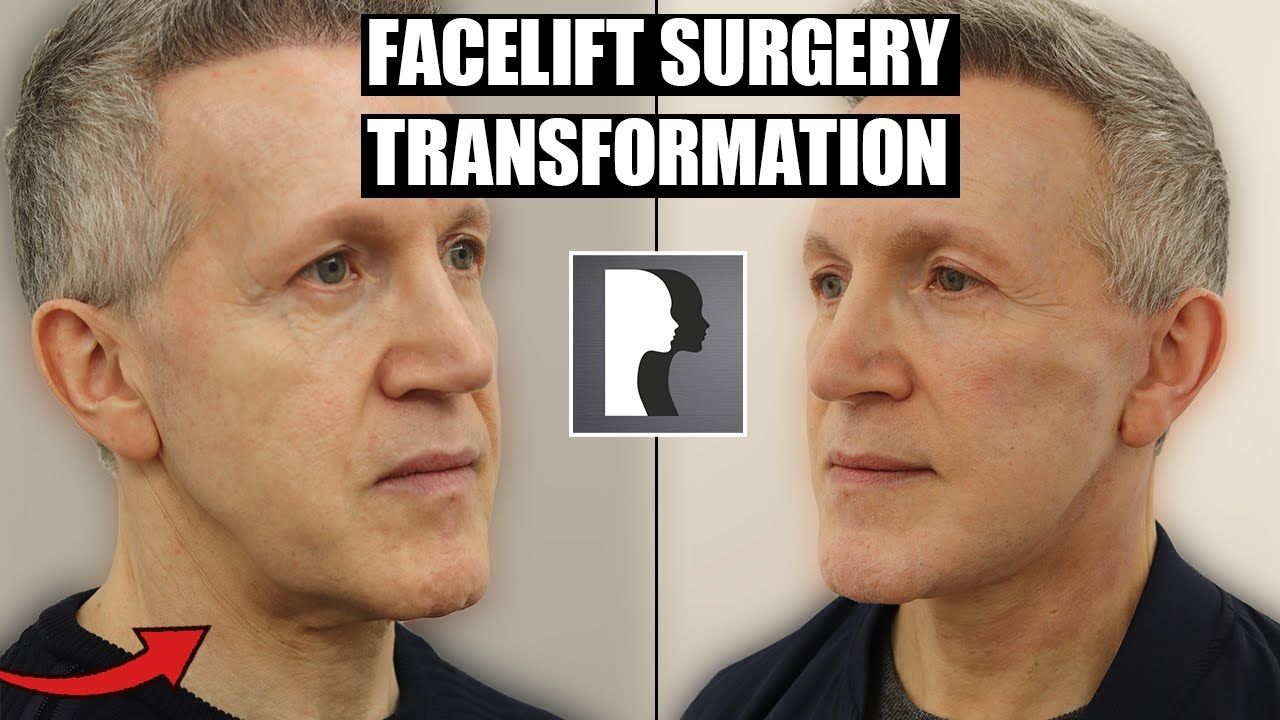
AMAZING MALE FACELIFT TRANSFORMATION IN ONLY 2 MONTHS! – NATURAL RESULTS
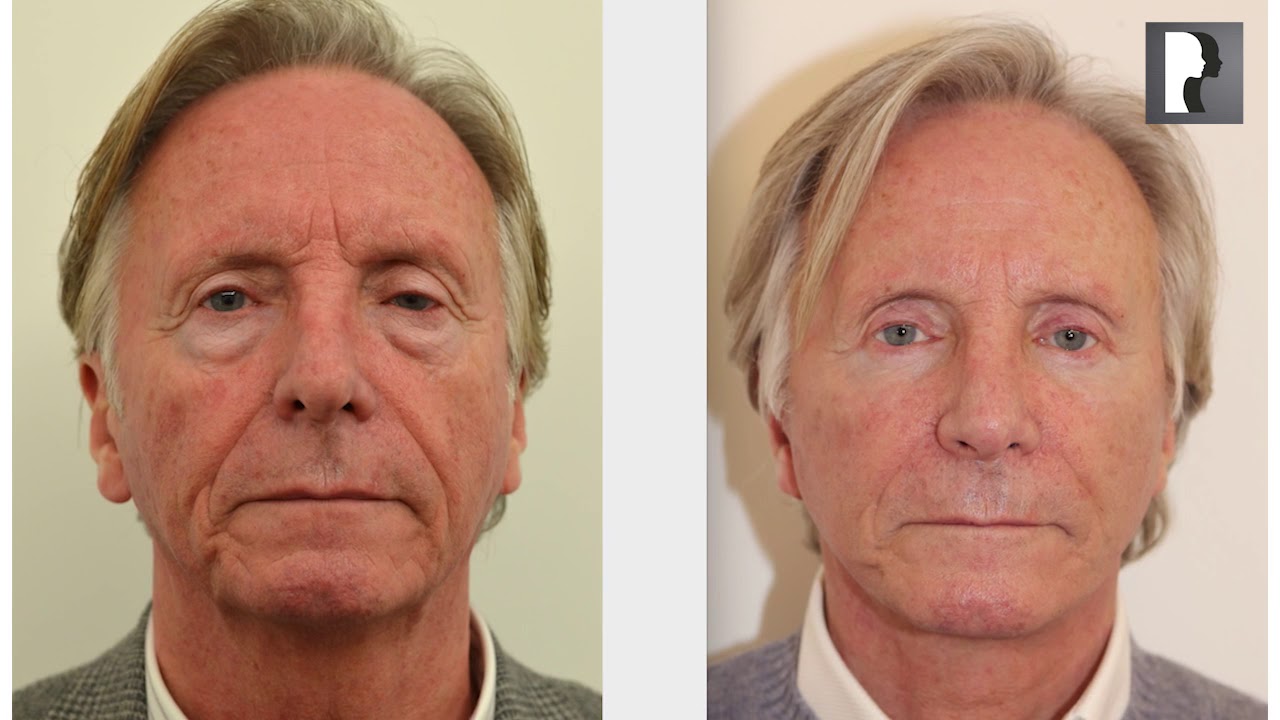
My experience of Natural facelift & neck lift surgery in London
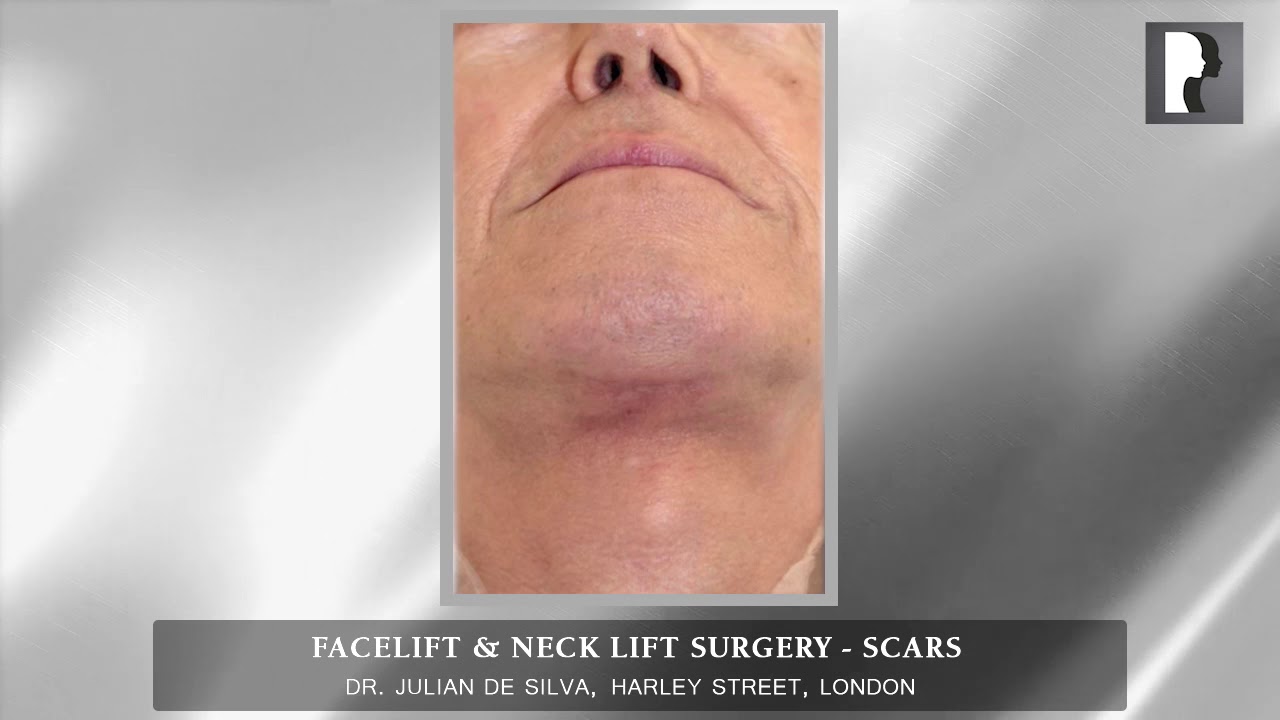
Natural Facelift & Neck Lift Surgery in London – Scars
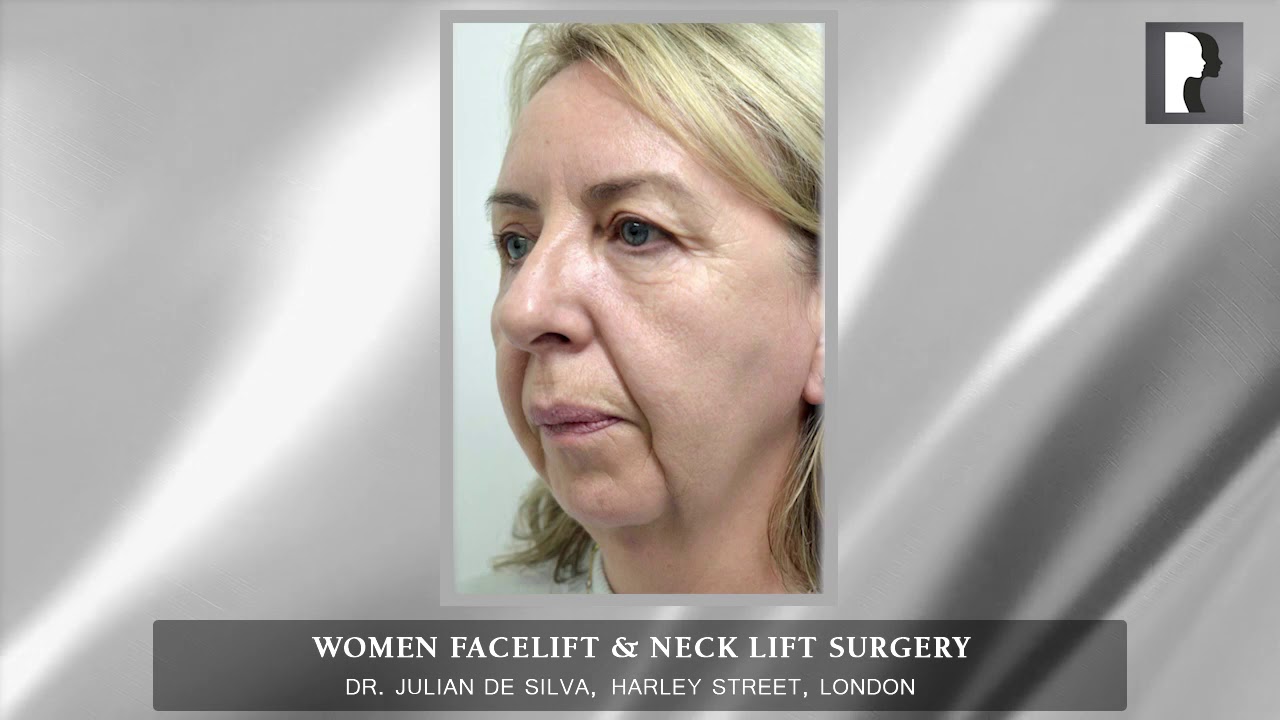
Natural Women Facelift & Neck Lift Surgery in London
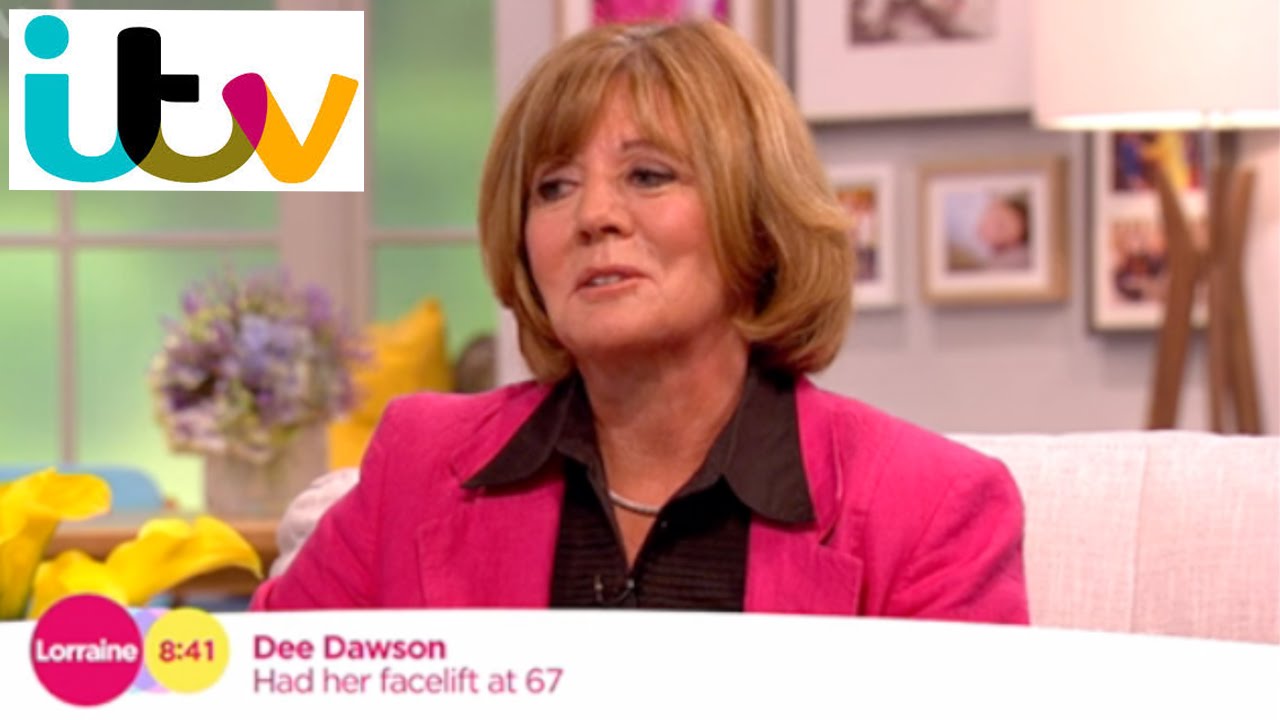
ITV Lorraine Show Featured patient of Dr. Julian De Silva, underwent Natural Face and Neck lifting
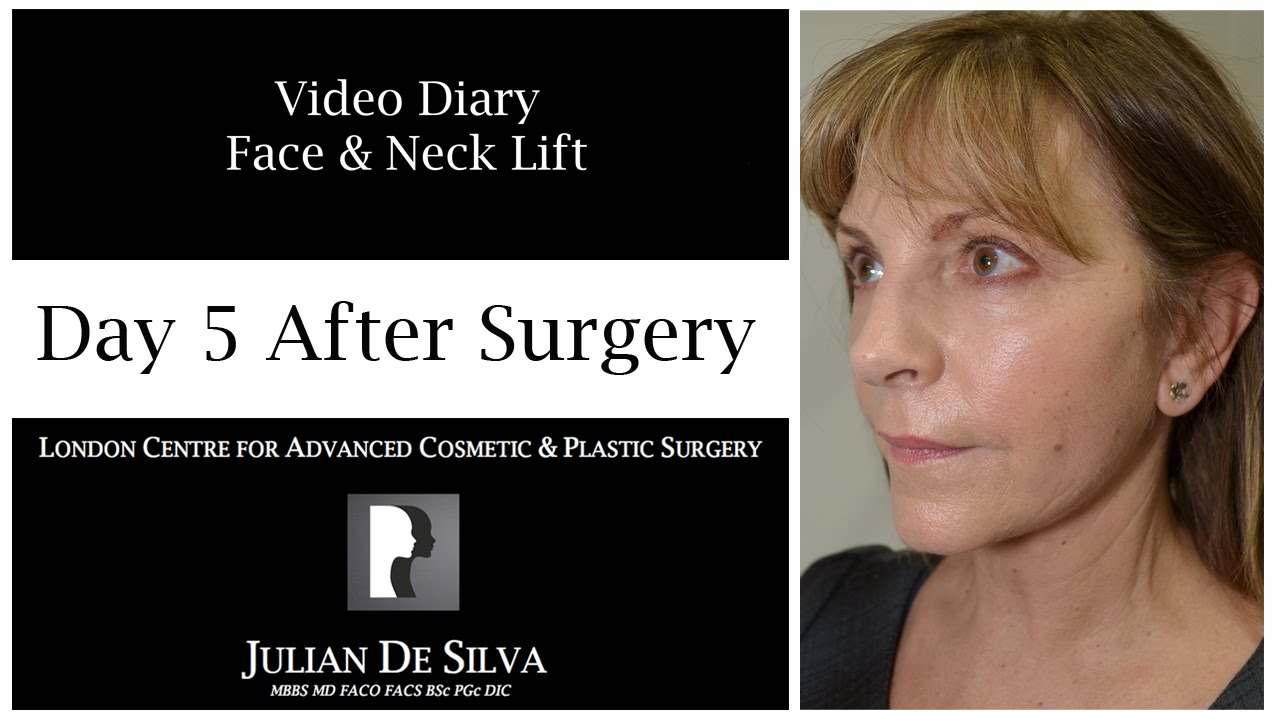
Facelift & Neck Lift Video Diary Day 5 After Surgery
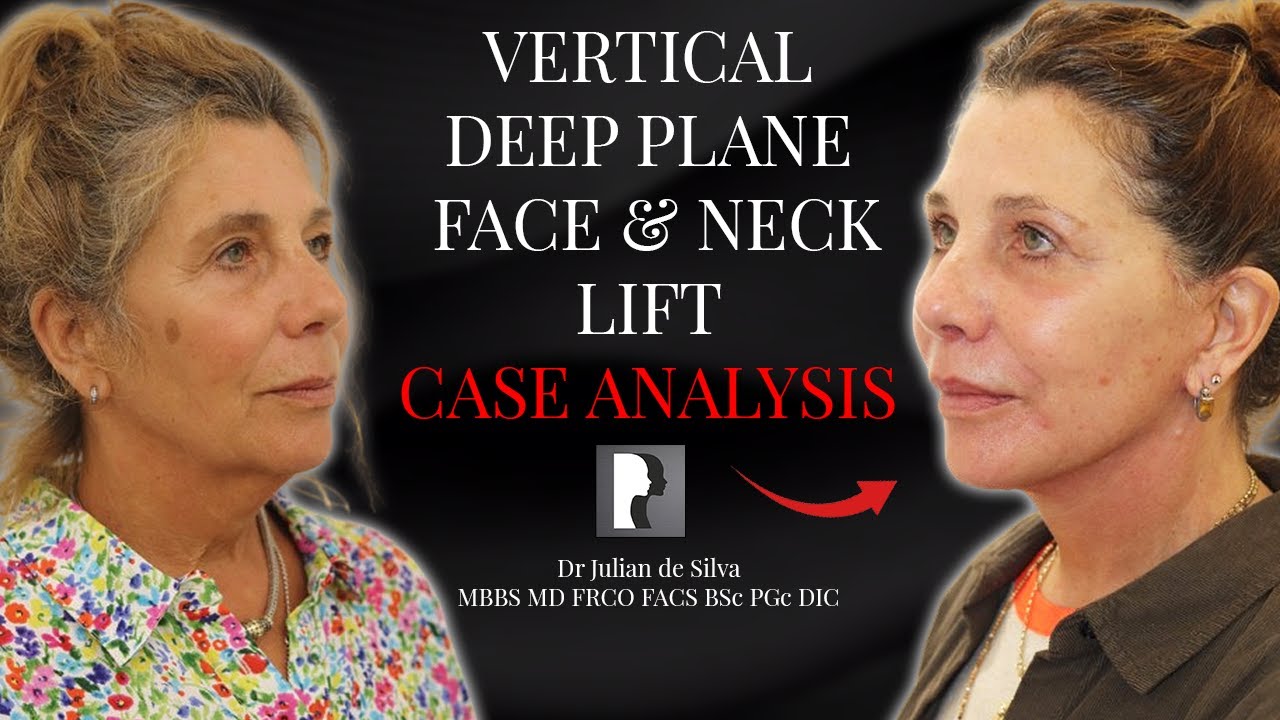
60 Year old looks 20 years younger with this INCREDIBLE Facelift Transformation!
What to Expect from Recovery
You must rest for a week or more following the procedure, with a gradual return to light activity as tolerated. Additionally, you should avoid strenuous activities, such as exercise and heavy lifting, for several weeks after the surgery. You must also take pain medication to help manage any pain or discomfort during recovery. It is recommended to keep your head elevated during sleep for at least one week to reduce swelling and promote proper healing. You must also use cold compresses to reduce inflammation and bruising. For most patients, these side effects will be gone a week after surgery. However, they can sometimes last up to two weeks.
Deep Plane Facelift Scars
Dr De Silva’s signature deep plane facelift produces minimal to zero scarring. Since the deep plane facelift does not separate the skin from the muscles, there is no tension on the incision lines when closed. This makes the incisions less noticeable. In addition, a deep plane facelift prevents pulling the earlobe, which can create a pixie ear. A pixie ear is a deformity in which the earlobes become elongated and pulled down after a facelift plastic surgery.
Client Results After 8 Weeks
Not a Traditional Facelift
A deep plane facelift effectively reduces signs of ageing such as sagging skin, jowls, nasolabial folds (lines from the edge of the nose to the mouth), and excess neck fat. After a deep plane facelift, you can expect smoother, younger-looking skin. In addition, getting a facelift early helps you recover faster. This is because there’s less tissue repositioning done. Yet, while a VFR-7 may provide superior results when compared with other types of facelift surgery, it does have some points to consider.
Risks Associated With the Vertical Face Restore Deep Plane Facelift
Swelling and bruising
It is normal to have some swelling and bruising after a Vertical Face Restore 7 deep plane facelift. However, prolonged or excessive swelling and bruising may indicate something has gone wrong. If this happens, contact your doctor right away.
Pain and discomfort
Pain is not a common feature following vertical facelift surgery. However, although we give patients analgesia from our experience, more than 50% of Dr De Silva’s patients do not require analgesia.
Scarring from incisions
Depending on the extent of your surgery, there may be scarring from any incisions present after the procedure to remove loose skin. Scars can be placed discretely around the curves of your ears and under their hairline. In the great majority of people, scars heal well and are difficult to see. There is a 1% possibility of troublesome scars e.g. keloid scars, these can require additional treatment.
Poor healing of tissue or skin
In some cases, wounds may not heal properly. This can cause further issues such as skin discolouration or other problems depending on where the wound is located on your face.
World Class Facial Cosmetic and Plastic Surgery
Videos Showing VFR-7 Results & Progress
Dr De Silva has transformed thousands of faces through his unique surgical techniques. Below is a small sample of some of his transformations.
Combine Your Deep Plane Facelift in London with Other Procedures
For optimal facial rejuvenation, consider combining your facelift with additional procedures. As one of the best deep plane facelift surgeons in the UK, Dr De Silva can use these combined procedures to address specific areas, creating a balanced, harmonious appearance in line with your aesthetic goals.
Brow Lift
A brow lift elevates sagging brows and smooths forehead lines, restoring a youthful, refreshed expression. This procedure complements a facelift by addressing upper-face concerns and enhancing overall facial harmony.
Blepharoplasty
Blepharoplasty, or eyelid surgery, removes excess skin and fat from the eyelids, rejuvenating tired eyes. This enhancement pairs well with a facelift, brightening the eye area for a revitalised look.
Skin Resurfacing
Skin resurfacing treatments improve skin tone, texture, and clarity by addressing fine lines, pigmentation, and scars. When combined with a facelift, these treatments create a smooth, radiant complexion.
Chin Implant
A chin implant enhances facial symmetry and strengthens the jawline, providing balance to the face. Paired with a facelift, it helps achieve a well-defined, youthful profile.
Is Dr De Silva the right fit for your Deep Plane Facelift?
If you’re feeling self-conscious about the signs of ageing and are looking for a way to restore a more youthful, refreshed appearance, Dr De Silva is the perfect choice for your Deep Plane Facelift. With years of experience and expertise in facial rejuvenation, he understands how important it is to not just turn back time but to do so in a way that looks natural and enhances your facial features.
Dr. De Silva’s skill in the Deep Plane Facelift goes beyond simply tightening the skin – he addresses the deeper layers of muscle and tissue for a result that rejuvenates and restores balance to your face, without the “pulled” look. When you choose Dr. De Silva, you’re choosing a compassionate expert who truly cares about helping you feel your very best.
- His VFR-7 technique is proven to provide superior results
- Educator to the American Society of Oculo-Facial Plastic Surgery, USA
- Incorporates advanced technology into the procedure for quick recovery time
Visit Dr Julian De Silva to Discuss Your London Deep Plane Facelift
Interested in learning more about how vertical face restore helps you achieve the youthful look you’ve always dreamed of?
Book a consultation with Dr De Silva today to discuss your options and receive a personalised treatment plan. You may also visit the clinic at 23 Harley St, London W1G 9QN, UK.
Frequently Asked Questions
What is a deep plane facelift, and how does it differ from other facelift techniques?
What is a deep plane facelift, and how does it differ from other facelift techniques?
Comparing deep plane facelift surgery with other types helps determine the best procedure for you.
The best facelift type varies from one person to another. Hence, it helps to know the differences between my signature deep plane facelift and other types of facelift.
Deep Plane Facelift vs. Skin-Only Facelift
Surgeons used to do facelift procedures by operating on the skin only, making the skin-only facelift one of the most traditional types of facelift.
As its name implies, the skin-only facelift involves operating on the skin. It does not lift the tissue beneath it. On the other hand, the deep plane facelift involves operating under the supportive layer of the face.
The skin-only facelift produces instant results. Recovery time (1 to 2 weeks) is shorter than that of a deep plane facelift. However, the results of my signature deep plane facelift last longer than those of a skin-only facelift.
Deep Plane Facelift vs. SMAS Facelift
SMAS stands for the superficial muscular aponeurotic system. Hence, the SMAS facelift targets the said area.
Just like the deep plane facelift, the SMAS facelift also targets the lower two-thirds of the face.
However, the primary difference is the SMAS facelift raises the skin and SMAS layer separately. The deep plane facelift raises them together.
Recovering from an SMAS facelift UK takes longer than recovering from a deep plane facelift. In particular, it takes 3 to 8 weeks. The results of my signature deep plane facelift also last longer than those of an SMAS facelift.
Deep Plane Facelift vs. MACS Facelift
MACS stands for minimal access cranial suspension. A MACS facelift targets the underlying muscles of the face.
The deep plane facelift targets a larger area compared to a MACS facelift. Recovery time (3 to 4 weeks) is slightly longer compared to my signature deep plane facelift. The results of my signature deep plane facelift last longer as well.
Deep Plane Facelift vs. Mini Facelift
A mini facelift is done by making tiny incisions on the face. Since the incisions are small, a mini facelift produces less dramatic results compared to my signature deep plane facelift.
In addition, a mini facelift only involves the skin. On the contrary, the deep plane facelift involves the skin and supportive layer of the face.
You can recover from a mini facelift (1 to 3 weeks) faster than a deep plane facelift. However, the results of my signature deep plane facelift last longer.
Deep Plane Facelift vs. S-Lift
The S-lift involves S-shaped incisions and removing excess skin and fat.
Recovering from an S-lift (3 to 5 days) is shorter than recovering from a deep plane facelift. However, the results of my signature deep plane facelift last longer.
How long do the results of a deep plane facelift last?
How long do the results of a deep plane facelift last?
A well-performed deep plane facelift typically produces results that last ten years or more. The longevity comes from addressing the structural layer of the face - the SMAS and the ligaments beneath, rather than simply tightening the skin surface. Because the tissue is repositioned rather than pulled, the result ages naturally rather than losing its effect suddenly. Dr De Silva sees all his patients annually and supports the longevity of surgical results with a three-way maintenance approach where appropriate: volume replacement using fillers, skin rejuvenation through laser and regenerative medicine, and skin tightening with radiofrequency. The aim is a result that looks natural at the time of surgery and continues to do so as the years pass.
How long do the results of a deep plane facelift last?
How long do the results of a deep plane facelift last?
The results of a deep plane facelift typically last ten years or more. This longevity is a direct consequence of the technique, because the procedure works at the structural level of the face, releasing and repositioning the deep tissue rather than simply tightening the skin surface, the result holds significantly longer than a skin-only or SMAS lift. Gravity and ageing continue after surgery, but the improvement achieved is durable and meaningful. Dr De Silva sees all his facelift patients annually and supports the longevity of results with a three-way maintenance approach where appropriate: volume replacement using fillers, skin rejuvenation through anti-wrinkle treatment, laser and regenerative medicine, and skin tightening with radiofrequency. The aim is a result that looks natural at the time of surgery and continues to do so as the years pass.
Am I a suitable candidate for a deep plane facelift, or would a less extensive procedure be more appropriate?
Am I a suitable candidate for a deep plane facelift, or would a less extensive procedure be more appropriate?
A deep plane facelift is most appropriate for patients with more significant facial changes; pronounced jowling, loss of the jawline definition, neck laxity, and descent of the mid-face that a mini facelift or non-surgical treatment cannot meaningfully address. For patients with earlier signs of ageing, smaller procedures or non-surgical options may be entirely appropriate, and Dr De Silva will say so honestly when that is the case. The determining factors are not age alone but the specific degree of change, the anatomy of the individual face, and what the patient is genuinely trying to achieve. Dr De Silva asks every patient to bring an old photograph to consultation - this acts as a blueprint for planning, allowing him to assess precisely what has changed and what a natural restoration would look like for that individual face.
What makes Dr De Silva's deep plane facelift different from a standard procedure?
What makes Dr De Silva's deep plane facelift different from a standard procedure?
Dr De Silva's Vertical Face Restore 7 differs from a standard deep plane facelift in several specific ways. The lift direction is vertical rather than lateral - repositioning tissue to where it sat in youth rather than pulling it sideways, which is what creates the swept or operated appearance. The ligament-like structures of the face are released precisely, allowing the face to be lifted naturally as a unit. Scars are hidden meticulously within the natural hairline and the curves of the ear- closing just one side takes forty-five minutes of careful technique. Recovery is accelerated through twilight sedation rather than general anaesthesia, which maintains stable blood pressure and significantly reduces bruising and swelling from the outset. Bio-technology including PRP, amniotic membrane product, micro-drains, light therapy, oxygen therapy and manual lymphatic drainage further reduce recovery time. Fewer than one percent of patients experience nausea after surgery. More than half use no pain relief beyond the first twenty-four hours.
What results can I expect from a deep plane facelift?
What results can I expect from a deep plane facelift?
A deep plane facelift restores the natural contours of the jaw and neck, lifts descended mid-face tissue, softens the nasolabial folds, and recreates the V-shaped jawline associated with a younger face. The result should look like you- rested, refreshed and natural, rather than operated upon or pulled. Because the tissue is repositioned vertically to where it sat in youth rather than pulled sideways, the face moves in a way that reads as genuinely younger rather than surgically altered. Dr De Silva uses Golden Ratio facial analysis to plan every procedure, mapping each patient's individual proportions before making a single surgical decision. This ensures the outcome is specific to your face, not a generic aesthetic standard. Most patients find that people around them notice they look well, rested or younge, without being able to identify surgery as the reason.
What is the recovery from a deep plane facelift, and when can I return to normal life?
What is the recovery from a deep plane facelift, and when can I return to normal life?
Recovery after a traditional facelift under general anaesthesia could last up to two months. Dr De Silva's approach has reduced this significantly- at two to three weeks, eighty to ninety percent of bruising and swelling will have resolved, and most patients are comfortable returning to social activities and the workplace. Hair dyeing should be avoided for five weeks. Strenuous exercise can typically resume at four weeks. Sun exposure must be avoided for six weeks, with SPF sunscreen, a wide-brimmed hat and UV-protective sunglasses worn whenever outdoors. Some numbness and tightness in the first weeks is normal. Internal stitches dissolve over up to three months, and the left and right sides may heal at slightly different rates during this period. While significant improvement is visible at six weeks, the face continues to settle for twelve to eighteen months - this is when the full, final result is established.
What can a deep plane facelift address, and what will it not improve?
What can a deep plane facelift address, and what will it not improve?
A deep plane facelift addresses the structural changes of facial ageing in the lower two-thirds of the face- jowling, loss of jaw definition, descent of the mid-face, and laxity of the neck. It restores the natural V-shaped jaw contour of youth and, when combined with a neck lift, addresses neck bands and the angle beneath the chin. What it does not address on its own is volume loss, skin quality, or changes around the eyes and brow; these require complementary techniques. Dr De Silva frequently combines his deep plane facelift with fat transfer to restore lost volume, CO₂ laser resurfacing to improve skin texture and tone, and blepharoplasty or brow lift where the eye area also requires attention. A comprehensive assessment at consultation determines which combination is appropriate for each individual, ensuring one area does not look refreshed while another tells a different story.
How long does the deep plane facelift procedure take, and what anaesthetic is used?
How long does the deep plane facelift procedure take, and what anaesthetic is used?
The Vertical Face Restore 7 deep plane facelift is performed under Dr De Silva's patented Rapid Recovery Twilight Sedation (GB2602123B) rather than general anaesthesia. Patients are comfortable and relaxed throughout, breathe independently, and are typically able to walk out of the operating theatre within thirty minutes of surgery completing. The procedure itself lasts several hours, depending on the number of techniques required and whether complementary procedures are being performed at the same time. It is an outpatient procedure - patients go home the same day. In clinical audit, patients have rated their sedation experience an average of 9.4 out of 10, and fewer than one percent experience nausea or sickness afterwards.
What does a deep plane facelift cost in London?
What does a deep plane facelift cost in London?
Deep plane facelift surgery is a bespoke procedure and the cost reflects the complexity of the technique, the experience of the surgeon, the facility, and whether complementary procedures are performed at the same time. As a specialist facial plastic surgeon operating exclusively on the face from his Harley Street practice, Dr De Silva's fees reflect the level of expertise, the personalised care provided before and after surgery, and the standard of the facility. An accurate cost can only be given following a consultation, at which point Dr De Silva will have assessed your face, discussed your goals and outlined a specific surgical plan. To discuss your individual requirements, please contact the practice to arrange a consultation.
What is the difference between a deep plane facelift and a SMAS facelift?
What is the difference between a deep plane facelift and a SMAS facelift?
Both a deep plane facelift and a SMAS facelift work beneath the skin, but they do so in fundamentally different ways. A SMAS facelift lifts the skin and the SMAS layer separately, the SMAS is tightened independently and the skin is then redraped over it. A deep plane facelift releases the ligaments that tether the SMAS to the deeper structures of the face, allowing the skin and SMAS to be lifted together as a single unit. This composite lift produces a more natural result because the tissue moves as one, rather than in separate layers that can look or feel incongruent. It also addresses the mid-face more effectively- the nasolabial folds and descended cheek tissue that a SMAS-only lift can leave relatively untreated. The deep plane technique is more technically demanding, but the difference in outcome for patients with significant facial ageing is meaningful.
Can a deep plane facelift address the neck, or is a separate neck lift needed?
Can a deep plane facelift address the neck, or is a separate neck lift needed?
A deep plane facelift and neck lift are most commonly performed together, and for the majority of patients this is the right approach; the lower face and neck are a continuous anatomical unit, and treating them separately rarely produces the most balanced result. The neck lift component addresses platysmal banding, excess neck skin, and the definition of the neck angle beneath the chin. In some cases, where significant neck laxity or deep neck fat requires additional work, Dr De Silva will incorporate further neck contouring techniques, including the use of a high-definition telescope from beneath the chin to guide precise fat removal and platysma tightening. Whether a neck lift is included, and to what extent, is determined by the anatomy of each individual patient and discussed in detail at consultation.
What is the difference between a deep plane facelift and a mini facelift?
What is the difference between a deep plane facelift and a mini facelift?
A mini facelift and a deep plane facelift are appropriate for fundamentally different degrees of facial change. A mini facelift addresses early signs of ageing- mild jowling and some skin laxity, through a smaller incision and with a shorter recovery. It does not address the neck, does not work at the deep structural level, and its results, while appropriate for the right patient, are less comprehensive and less durable than a deep plane procedure. A deep plane facelift is the right choice when changes are more significant; when jowling is pronounced, when neck laxity is present, when the mid-face has descended, or when a patient wants a result that will last. The choice between the two is determined entirely by anatomy and goals, not by preference. Dr De Silva will recommend the approach that is genuinely right for each individual patient, including recommending a smaller procedure when that is the honest answer.
Will I have visible scarring after a deep plane facelift?
Will I have visible scarring after a deep plane facelift?
Scarring after a deep plane facelift depends significantly on surgical technique and the precision of incision placement. Dr De Silva is meticulous about hiding incisions within the natural curves of the ear and hairline - closing just one side of the face takes forty-five minutes of careful technique, and the same care is applied to the other side. Because the deep plane technique lifts without placing tension on the skin, the skin is redraped gently and heals without the pulling or distortion that creates visible scars. Scars are positioned to preserve the sideburn area and the natural hairline behind the ear, allowing hair to be worn up after surgery. In a small number of patients, genetics can affect how the skin heals; this is discussed openly at consultation, and Dr De Silva may use medications that soften scar appearance where indicated.
How does the deep plane facelift address the mid-face and nasolabial folds?
How does the deep plane facelift address the mid-face and nasolabial folds?
One of the significant advantages of a deep plane facelift over shallower techniques is its ability to address the mid-face; the area of the cheeks and nasolabial folds that descends with age and creates the hollowed, heavier appearance of an older face. By releasing the retaining ligaments at the deep plane level, the descended mid-face tissue can be lifted and repositioned as part of the same procedure, rather than leaving it untreated. This is why deep plane facelift patients frequently notice improvement in their nasolabial folds - the deepening of the lines from the nose to the mouth- that SMAS or skin-only techniques do not achieve. The result is a more complete facial rejuvenation that addresses the face as a whole rather than the lower third in isolation.
How is the deep plane facelift adapted for male patients?
How is the deep plane facelift adapted for male patients?
Male patients require specific adaptations to the deep plane facelift technique that go beyond simply performing the same procedure on a different face. The male aesthetic reference points are different; a stronger jaw, a lower brow, a more defined neck angle, and over-lifting or over-tightening in a man's face creates feminisation rather than rejuvenation. Dr De Silva's approach for male patients focuses the lift more heavily on the neck and jawline, which produces the most naturally masculine result. Incisions are planned specifically around male hair patterns- a smaller incision hidden behind the ear is particularly important for men with short hair, thinning hair or receding hairlines. Men comprise one quarter of Dr De Silva's facelift practice, and his published research on male facial proportions informs every male surgical plan.
Can fat transfer be combined with a deep plane facelift, and why is this sometimes recommended?
Can fat transfer be combined with a deep plane facelift, and why is this sometimes recommended?
Fat transfer is one of the most commonly combined procedures with a deep plane facelift, and for many patients it produces a significantly more complete result. A facelift addresses the descent of tissue - it lifts and repositions what has fallen. But ageing also involves volume loss- the deflation of fat compartments in the cheeks, temples and around the eyes that creates a hollowed, gaunt appearance that lifting alone does not correct. Micro-cannula fat transfer harvests fat from elsewhere on the body, processes it, and reintroduces it precisely into the areas of volume loss, restoring the fullness and three-dimensional contour of a younger face. Combining fat transfer with facelift at the same procedure allows Dr De Silva to address both descent and deflation together, producing a result that is both lifted and naturally volumised rather than simply tighter.
What are the risks of a deep plane facelift, and how does Dr De Silva minimise them?
What are the risks of a deep plane facelift, and how does Dr De Silva minimise them?
A deep plane facelift is a more technically demanding procedure than shallower techniques, but in experienced hands its risk profile is well understood and manageable. The most common risks are bruising and swelling- significantly reduced by Dr De Silva's use of twilight sedation, which maintains stable blood pressure throughout, and by his fast-healing bio-technology protocol. The risk of haematoma - a collection of blood beneath the skin, is reported at two to three percent with conventional techniques; Dr De Silva's approach reduces this to below one percent. Temporary numbness and tightness are expected and resolve over weeks to months. Facial nerve injury is a risk with any facelift- rare, and typically transient when it occurs, resolving as the nerve regains function. Dr De Silva sees every patient personally within twenty-four hours of surgery, as early assessment of any concern is fundamental to a good outcome. All risks are discussed in full at consultation.
How does the Golden Ratio inform deep plane facelift planning?
How does the Golden Ratio inform deep plane facelift planning?
Golden Ratio facial analysis is central to how Dr De Silva plans every facelift procedure. The Golden Ratio- the mathematical proportion that has defined facial beauty across cultures for thousands of years, provides an objective framework for assessing each patient's facial proportions before making a single surgical decision. Rather than working from a generic aesthetic standard or a subjective sense of what looks right, Dr De Silva maps the specific proportions of each patient's face and uses this analysis to determine precisely what needs to be repositioned, by how much, and in what direction. This means the outcome is specific to your face - a restoration of your own natural proportions rather than an approximation of someone else's. Dr De Silva has developed proprietary software for this facial evaluation, which he uses as a planning tool for every procedure.
Why choose Dr De Silva for deep plane facelift surgery in London?
Why choose Dr De Silva for deep plane facelift surgery in London?
Dr De Silva is one of a small number of surgeons in the UK whose practice is dedicated exclusively to the face; every procedure he performs, every technique he refines, and every piece of research he conducts relates to facial surgery alone. His Vertical Face Restore 7 deep plane technique has been developed over more than fifteen years and refined through completing revision procedures on other surgeons' results- over 20% of his patients come to him specifically to correct surgery performed elsewhere. He is the Director of the International Facelift Course at the ASOPRS and AAO in the United States, teaching deep plane facelift techniques to surgeons from around the world. His patented twilight sedation protocol, his published research, and his annual clinical audit - which consistently shows a revision rate of three to six percent, all reflect a practice built on precision, safety and consistently natural results. Patients travel to him from over seventy countries.

Dr. Julian De Silva is a renowned facial cosmetic surgeon at Harley Street, London, specializing in facelift, blepharoplasty, and rhinoplasty. Known for natural-looking results, he has treated top celebrities and uses advanced technology for fast recovery. Dr. De Silva is also a recognized author and educator in aesthetic surgery.